
1. పరిచయం
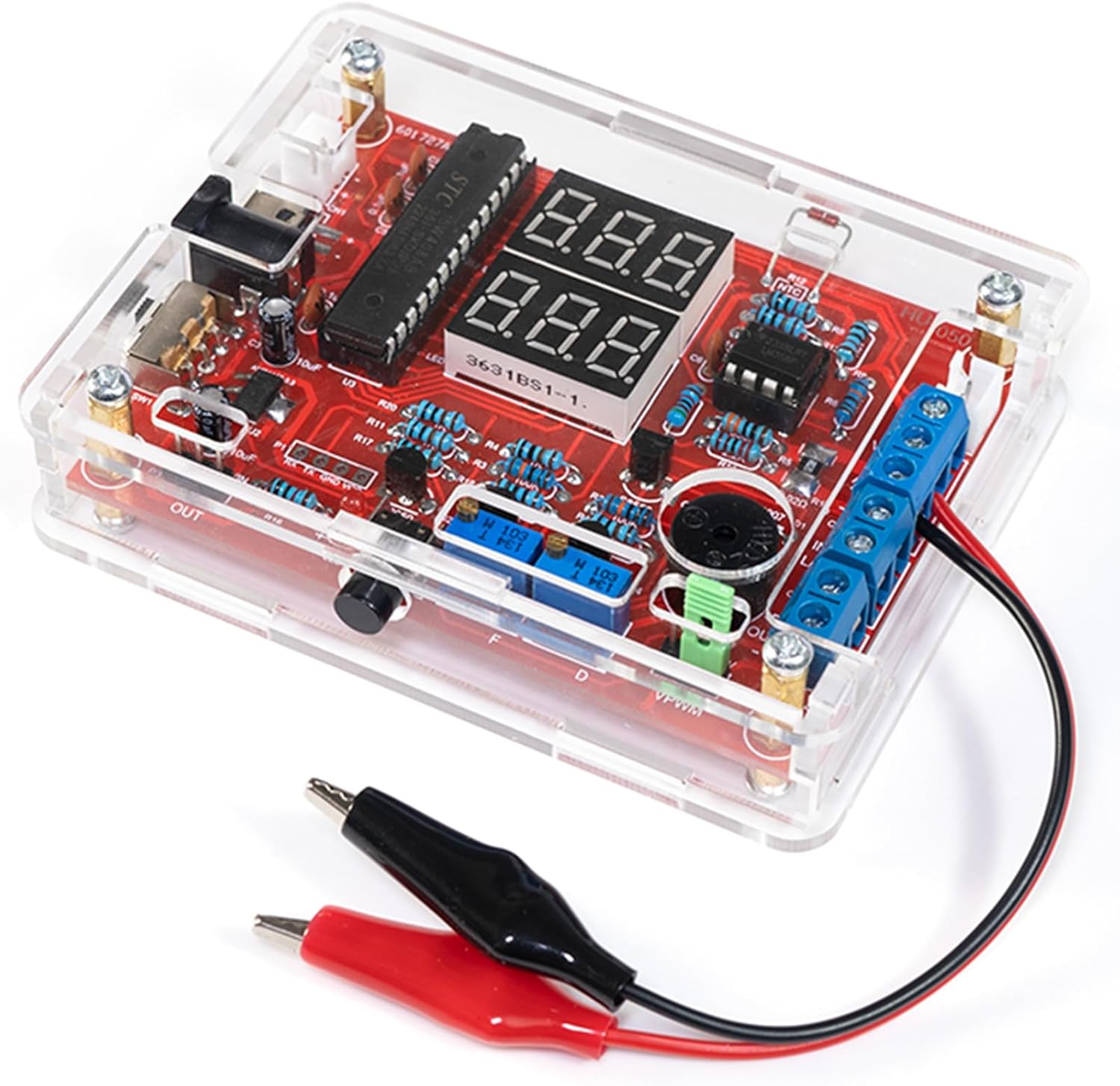
The EIELE DIY Multifunctional Meter Soldering Practice Kit (Model HYPP0143) is designed for electronics enthusiasts, students, and beginners to learn soldering skills and understand basic electronic principles. This kit allows you to assemble a fully functional meter capable of measuring various electrical parameters.
Upon successful assembly, the meter can perform the following functions:
- వాల్యూమ్tagఇ కొలత
- ప్రస్తుత కొలత
- ఉష్ణోగ్రత కొలత
- Logic Level Detection
- Circuit Continuity (On/Off) Testing
- Signal Frequency Measurement
- డ్యూటీ సైకిల్ కొలత
- Signal Output (PWM)
This manual provides step-by-step instructions for assembly, operation, and maintenance to ensure a successful and educational experience.
2. భద్రతా సమాచారం
Please read and understand all safety precautions before beginning assembly or operation. Improper use can result in injury or damage to the device.
2.1 Soldering Safety
- వెంటిలేషన్: టంకము పొగలను పీల్చకుండా ఉండటానికి ఎల్లప్పుడూ బాగా వెంటిలేషన్ ఉన్న ప్రదేశంలో పని చేయండి.
- కంటి రక్షణ: Wear safety glasses to protect your eyes from splashes of molten solder or flying component leads.
- Hot Iron: Soldering irons reach high temperatures. Avoid direct contact with the tip. Use a soldering iron stand.
- అగ్ని ప్రమాదం: Keep flammable materials away from your soldering workstation.
- లీడ్-ఫ్రీ సోల్డర్: If using lead-free solder, note that it requires higher temperatures and may be more difficult to work with for beginners.
2.2 విద్యుత్ భద్రత
- విద్యుత్ సరఫరా: Use only a stable 5V DC power supply as specified. Incorrect voltage can damage the circuit.
- షార్ట్ సర్క్యూట్లు: Ensure no bare wires or component leads touch unintentionally, which could cause a short circuit.
- కెపాసిటర్లు: Electrolytic capacitors must be installed with correct polarity. Incorrect installation can lead to damage or explosion.
- స్టాటిక్ డిశ్చార్జ్: Handle electronic components with care to prevent damage from electrostatic discharge (ESD).
3. ప్యాకేజీ విషయాలు
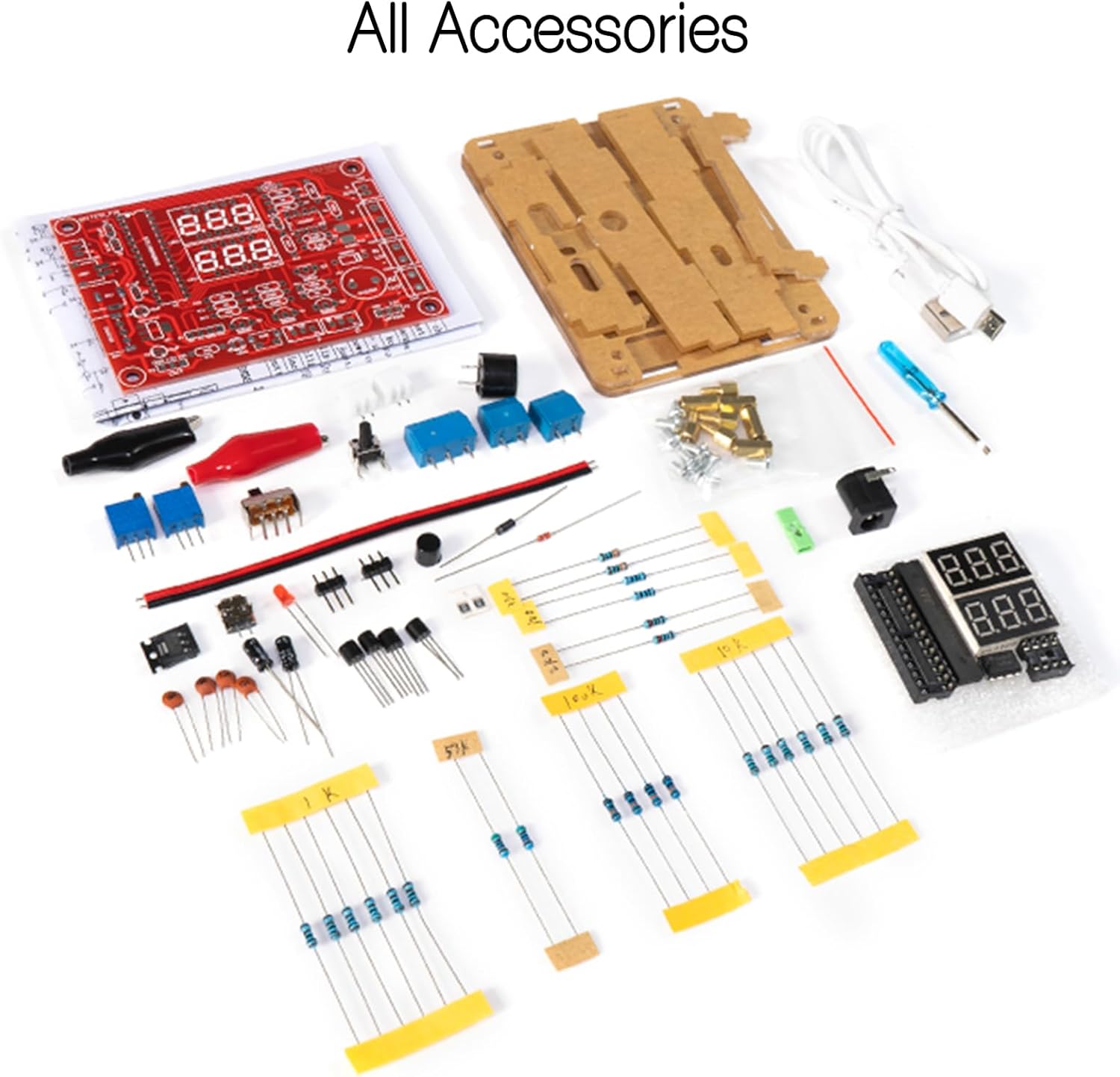
Before starting assembly, verify that all components listed below are present in your kit. Refer to Figure 3.1 for a visual representation of the kit contents.
- ప్రింటెడ్ సర్క్యూట్ బోర్డ్ (PCB)
- Acrylic Enclosure Panels
- Microcontroller (e.g., STC series)
- కార్యాచరణ Amplifiers (e.g., LM358)
- 7-Segment LED Displays
- రెసిస్టర్లు (వివిధ విలువలు)
- కెపాసిటర్లు (విద్యుద్విశ్లేషణ మరియు సిరామిక్)
- Diodes (e.g., 1N4007)
- ట్రాన్సిస్టర్లు
- Potentiometers (adjustable resistors)
- స్విచ్ టోగుల్ చేయండి
- పుష్ బటన్లు
- బజర్
- NTC Thermistor (for temperature measurement)
- టెర్మినల్ బ్లాక్స్
- DC పవర్ జాక్
- USB పవర్ కేబుల్
- Test Leads (alligator clips)
- Screws and Standoffs for enclosure
- చిన్న స్క్రూడ్రైవర్
- పేపర్ సూచనలు
4. అసెంబ్లీ సూచనలు
This section guides you through the assembly process. Take your time, follow each step carefully, and double-check your work.
4.1 అవసరమైన సాధనాలు (చేర్చబడలేదు)
- టంకం ఇనుము
- Solder (preferably thin gauge)
- Solder Wick or Solder Pump (for desoldering mistakes)
- Wire Cutters/Flush Cutters
- సూది-ముక్కు శ్రావణం
- మల్టీమీటర్ (ఐచ్ఛికం, భాగాలను పరీక్షించడానికి)
4.2 Component Identification and Preparation
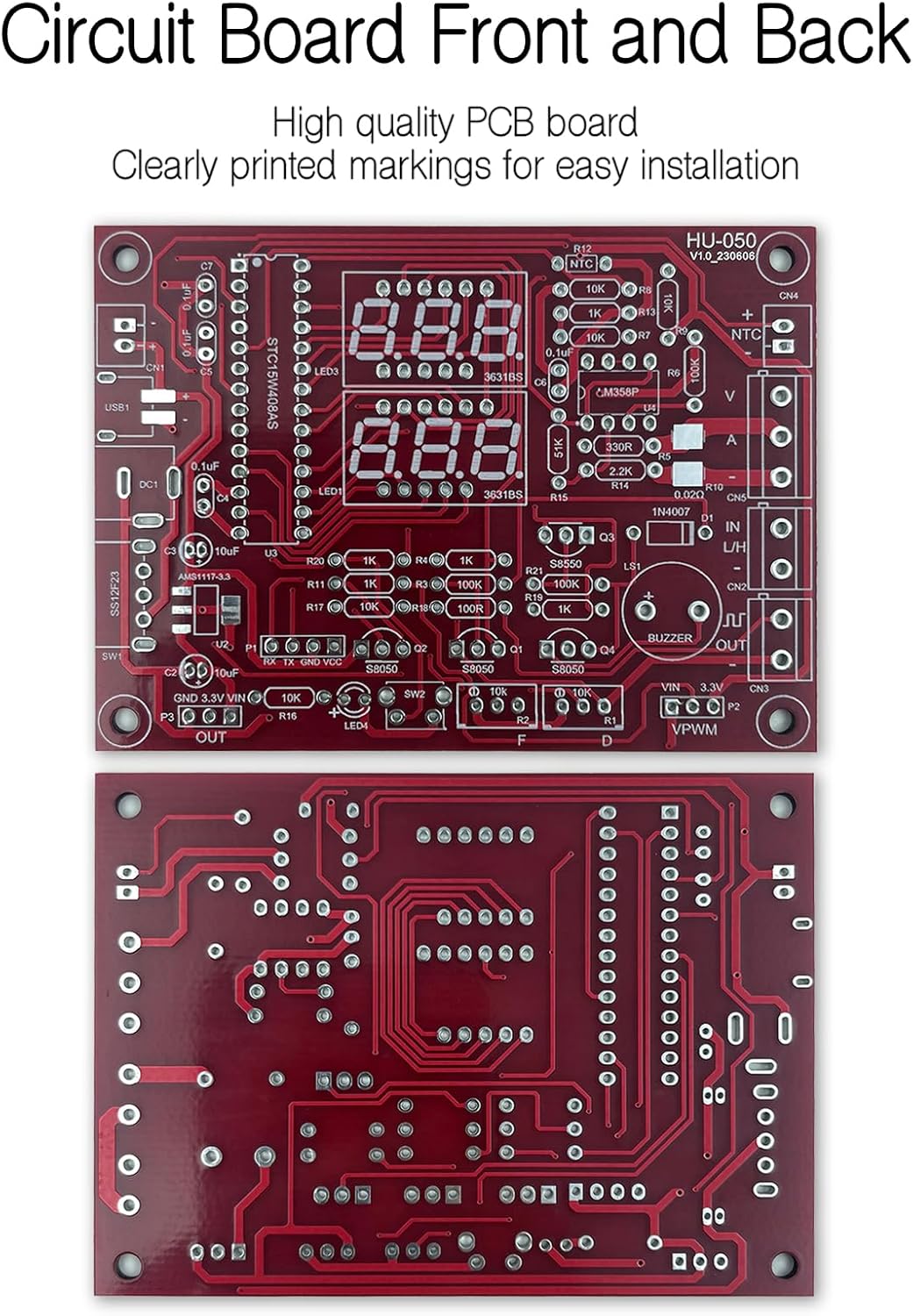
Before soldering, identify each component. Resistors are color-coded, capacitors have values printed, and diodes/LEDs have polarity markings. The PCB has silkscreen labels indicating where each component should be placed and its value.
4.3 Soldering Process
It is generally recommended to solder components from smallest to largest. This prevents larger components from obstructing access to smaller pads.
- రెసిస్టర్లు: Bend the leads, insert into the correct holes, and solder. Trim excess leads.
- డయోడ్లు: Pay close attention to the polarity (band on diode matches band on PCB silkscreen).
- కెపాసిటర్లు: Ceramic capacitors are non-polarized. Electrolytic capacitors have a stripe indicating the negative lead; match this to the PCB marking.
- IC Sockets: If included, solder the IC sockets first, ensuring the notch aligns with the PCB marking. Insert the ICs into the sockets after all soldering is complete.
- Transistors, LEDs, Buzzer: Observe polarity and orientation as indicated on the PCB.
- Switches, Buttons, Potentiometers, Terminal Blocks, DC Jack: Solder these larger components last.
- 7-Segment Displays: Solder these carefully, ensuring they are flush with the PCB.

4.4 ఎన్క్లోజర్ అసెంబ్లీ
Once all components are soldered and the PCB is inspected for any solder bridges or cold joints, assemble the acrylic enclosure.
- Remove the protective film from all acrylic panels.
- Mount the PCB onto the bottom acrylic panel using the provided standoffs and screws.
- Attach the side panels, ensuring all cutouts align with the PCB components (e.g., DC jack, switches, terminal blocks).
- Secure the top panel with the remaining screws.
5. ఆపరేటింగ్ సూచనలు
This section details how to power on your multifunctional meter and utilize its various measurement capabilities.
5.1 పవర్ ఆన్
Connect the provided USB power cable to the DC power jack on the meter and to a 5V USB power source (e.g., phone charger, computer USB port). Flip the toggle switch to the ON position. The 7-segment displays should illuminate.
5.2 కొలత విధులు
The meter offers multiple measurement modes. Use the push buttons to cycle through the modes. Refer to Figure 5.1 for connection diagrams for each function.

- వాల్యూమ్tagఇ మరియు ప్రస్తుత కొలత:
Connect the positive and negative terminals of the circuit under test to the designated 'V' and 'A' input terminals. The display will show voltage in Volts (V) and current in Amperes (A). Ensure connections are made correctly for series (current) and parallel (voltage) measurements. - ఉష్ణోగ్రత కొలత:
Connect the NTC thermistor to the dedicated temperature input terminals. The display will show ambient and external temperature readings. - Logic Level Detection:
Connect the signal to be tested to the 'IN L/H' input. The display will indicate 'L' for low logic level, 'H' for high logic level, or '-' for an undefined state. - Circuit Continuity (On/Off):
Connect the test leads to the 'IN L/H' input. The display will indicate continuity (on) or open circuit (off). - Signal Frequency and Duty Cycle Measurement:
Connect the signal to be analyzed to the 'IN L/H' input. The display will show the signal's frequency in kHz and its duty cycle in percentage. - Signal Output (PWM):
The meter can generate a Pulse Width Modulation (PWM) signal from the 'PWM OUT' terminal. Use the onboard potentiometers to adjust the frequency and duty cycle of the output signal. The display will show the current frequency and duty cycle settings.
6. స్పెసిఫికేషన్లు
The following table outlines the key specifications of the EIELE DIY Multifunctional Meter Soldering Practice Kit.
| ఫీచర్ | స్పెసిఫికేషన్ |
|---|---|
| మోడల్ సంఖ్య | HYPP0143 |
| తయారీదారు | HYIC |
| మెటీరియల్ | Copper (PCB), Acrylic (Enclosure) |
| ప్రదర్శన రకం | LCD (7-Segment LED Displays) |
| పవర్ ఇన్పుట్ | 5V DC (USB ద్వారా) |
| వస్తువు బరువు | 6.1 ఔన్సులు (సుమారు 173గ్రా) |
| చేర్చబడిన భాగాలు | KIT (unassembled components) |

7. ట్రబుల్షూటింగ్
If you encounter issues during or after assembly, consult the following troubleshooting tips:
- No Power/Display Not Lighting Up:
Check your 5V power supply. Ensure the power cable is securely connected. Verify the toggle switch is in the ON position. Inspect the DC power jack and its solder joints for proper connection. - Incorrect Readings or Malfunction:
Review all solder joints for cold joints (dull, lumpy appearance) or solder bridges (solder connecting two adjacent pads). Check component polarity, especially for diodes, LEDs, and electrolytic capacitors. Ensure all ICs are correctly seated in their sockets (if applicable) and oriented properly. - తప్పిపోయిన భాగాలు:
Refer to the package contents list (Section 3) and Figure 3.1 to confirm all parts were received. - భౌతిక నష్టం:
If any components or the PCB appear physically damaged, do not proceed with assembly. Contact customer support.
If the project does not work properly after soldering, please contact EIELE customer support for professional assistance. Our goal is for each user to successfully complete their project.
8. నిర్వహణ
To ensure the longevity and proper functioning of your multifunctional meter, follow these maintenance guidelines:
- శుభ్రపరచడం: Use a soft, dry cloth to clean the acrylic enclosure. Avoid abrasive cleaners or solvents that could damage the plastic.
- నిల్వ: Store the meter in a dry, dust-free environment away from direct sunlight and extreme temperatures.
- నిర్వహణ: Handle the meter with care to avoid dropping it or subjecting it to physical shock, which could damage internal components or solder joints.
- ఉపయోగంలో లేనప్పుడు పవర్ ఆఫ్ చేయండి: Always switch off the meter and disconnect the power supply when not in use for extended periods.
9. వారంటీ మరియు మద్దతు
EIELE is committed to the quality of its products. All kit parts are rigorously tested and are high-quality components.
If you encounter any difficulties during assembly or if the completed project does not function as expected, please do not hesitate to contact EIELE customer support. We are dedicated to providing professional assistance until you are satisfied with your project's completion.
For support, please refer to the contact information provided with your purchase or on the EIELE official webసైట్.