1. పరిచయం
The ST-LINK/V2 is an essential in-circuit debugger and programmer designed for the STM8 and STM32 microcontroller families. It facilitates communication between your development environment and the target microcontroller on an application board.
This device utilizes two primary interfaces for communication:
- Single Wire Interface Module (SWIM): Used for STM8 microcontrollers.
- JTAG/Serial Wire Debugging (SWD): Used for STM32 microcontrollers.
The ST-LINK/V2 connects to your computer via a USB full-speed interface, enabling seamless interaction with various integrated development environments (IDEs) and programming software.

Figure 1: ST-Link/V2 kit including the debugger, connection cables, and documentation.
2 కీ ఫీచర్లు
- 5 V power supplied directly via a USB connector.
- USB 2.0 full-speed compatible interface.
- Includes a USB standard A to Mini-B cable for connection.
- SWIM Specifics:
- Supports 1.65 V to 5.5 V application voltage.
- Supports low-speed and high-speed modes.
- Programming speed rates: 9.7 Kbytes/s (low speed), 12.8 Kbytes/s (high speed).
- Includes SWIM cable for connection via ERNI standard vertical/horizontal connectors or 2.54 mm pitch pin headers.
- JTAG/SWD Specifics:
- Supports 1.65 V to 3.6 V application voltage with 5 V tolerant inputs.
- Includes JTAG cable for connection to standard JTAG 20-pin pitch 2.54 mm connectors.
- J కి మద్దతు ఇస్తుందిTAG, SWD, and Serial Wire Viewer (SWV) communication.
- Direct Firmware Update (DFU) feature supported.
- Status LED indicates communication activity with the PC.
- Operating temperature range: 0 to 50 °C.
3. సెటప్ మరియు ఇన్స్టాలేషన్
Before using the ST-LINK/V2, ensure proper driver installation and connection to your development environment.
3.1. హార్డ్వేర్ కనెక్షన్
- Connect the ST-LINK/V2 to your computer using the provided USB standard A to Mini-B cable. The device is powered via this USB connection.
- Identify the appropriate interface on the ST-LINK/V2 for your target microcontroller:
- For STM8 microcontrollers, use the SWIM interface.
- For STM32 microcontrollers, use the JTAG/SWD ఇంటర్ఫేస్.
- Connect the ST-LINK/V2 to your application board's target microcontroller using the relevant cable (SWIM cable for STM8, JTAG cable for STM32). Ensure correct pin orientation and voltagఇ అనుకూలత.
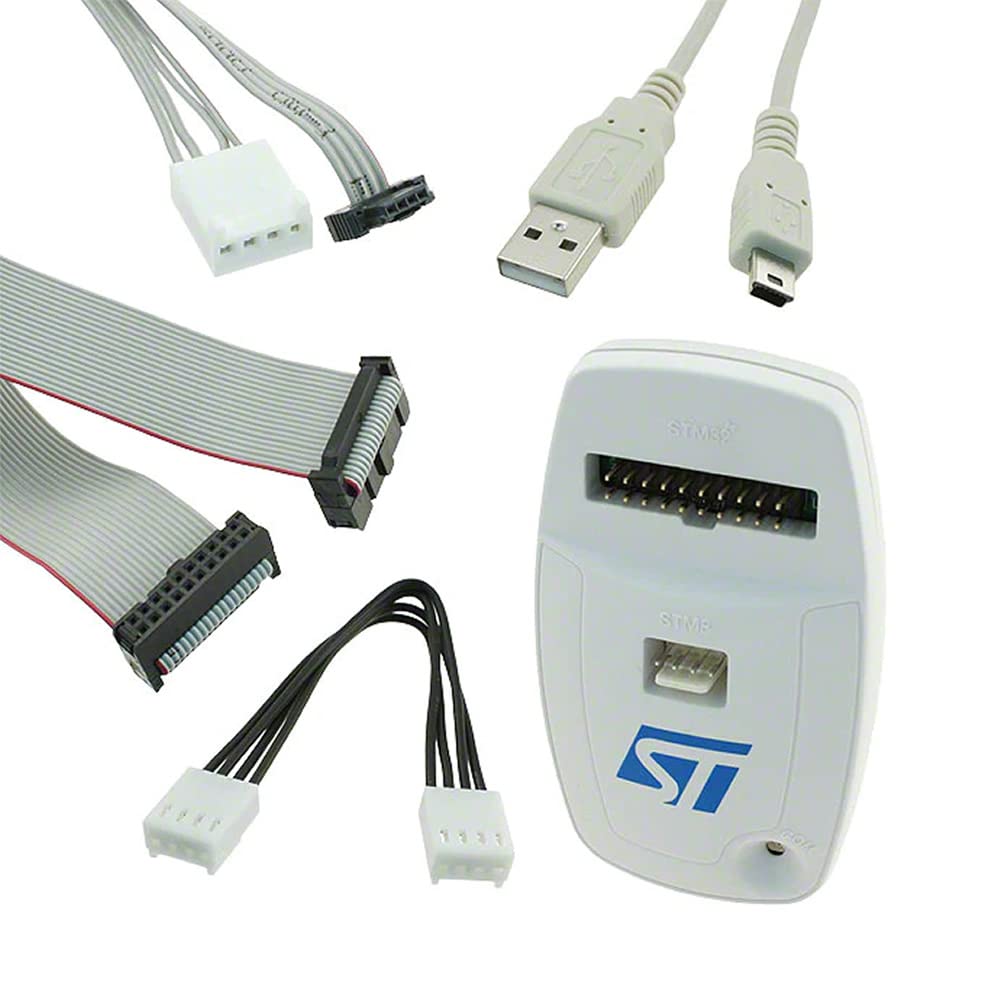
Figure 2: ST-Link/V2 device and its accompanying connection cables for different interfaces.
3.2 సాఫ్ట్వేర్ మరియు డ్రైవర్ ఇన్స్టాలేషన్
Drivers for the ST-LINK/V2 are typically included with the STMicroelectronics development tools. It is recommended to download the latest ST-LINK drivers and firmware from the official STMicroelectronics webసైట్.
- Visit the official STMicroelectronics website and navigate to the ST-LINK/V2 product page or the software and tools section.
- Download and install the latest ST-LINK drivers. These drivers are crucial for your operating system to recognize the device.
- Download and install the necessary integrated development environment (IDE) or programming software for your microcontroller family:
- For STM8 applications: ST Visual Develop (STVD) or ST Visual Program (STVP).
- For STM32 applications: Atollic TrueSTUDIO, IAR Embedded Workbench, Keil MDK-ARM, or TASKING.
- Ensure the ST-LINK/V2 firmware is up to date using the ST-LINK Utility software (usually part of the driver package).
4. ఆపరేటింగ్ సూచనలు
Once the ST-LINK/V2 is connected and drivers are installed, you can begin programming and debugging your microcontrollers.
4.1. Programming and Debugging STM8
For STM8 microcontrollers, the ST-LINK/V2 uses the SWIM interface.
- Open ST Visual Develop (STVD) for debugging or ST Visual Program (STVP) for programming.
- In your chosen software, select ST-LINK as the programming/debugging tool.
- Configure the target microcontroller settings, including the SWIM interface speed (low-speed or high-speed) and application voltage.
- Load your firmware or project into the software.
- Initiate programming or debugging as required by the software interface. The status LED on the ST-LINK/V2 will blink during communication.
4.2. Programming and Debugging STM32
For STM32 microcontrollers, the ST-LINK/V2 uses the JTAG/SWD ఇంటర్ఫేస్.
- Open your preferred IDE (e.g., Atollic TrueSTUDIO, IAR Embedded Workbench, Keil MDK-ARM, TASKING).
- In the IDE's project settings or debug configuration, select ST-LINK as the debugger/programmer.
- Ensure the correct interface (JTAG or SWD) is selected and verify the application voltagఇ సెట్టింగులు.
- Build your project and load the executable onto the target.
- Start the debugging session or program the flash memory. The status LED on the ST-LINK/V2 will blink during data transfer.

Figure 3: ST-Link/V2 in operation, showing the illuminated status LED indicating active communication.
4.3. Direct Firmware Update (DFU)
The ST-LINK/V2 supports Direct Firmware Update (DFU), allowing you to update its internal firmware. This is typically done via the ST-LINK Utility software and ensures compatibility with the latest microcontrollers and features. Refer to the ST-LINK Utility documentation for detailed DFU procedures.
5. నిర్వహణ
To ensure the longevity and optimal performance of your ST-LINK/V2, follow these maintenance guidelines:
- నిల్వ: ఉపయోగంలో లేనప్పుడు పరికరాన్ని పొడి, దుమ్ము లేని వాతావరణంలో నిల్వ చేయండి.
- శుభ్రపరచడం: పరికరం యొక్క బాహ్య భాగాన్ని శుభ్రం చేయడానికి మృదువైన, పొడి వస్త్రాన్ని ఉపయోగించండి. ద్రవ క్లీనర్లు లేదా ద్రావకాలను ఉపయోగించడం మానుకోండి.
- నిర్వహణ: Handle the device and its cables with care. Avoid excessive bending or pulling of cables, especially near connectors.
- ఉష్ణోగ్రత: Operate and store the device within its specified temperature range (0 to 50 °C).
- ఫర్మ్వేర్ నవీకరణలు: Regularly check for and apply firmware updates for the ST-LINK/V2 to ensure compatibility and access to new features.
6. ట్రబుల్షూటింగ్
If you encounter issues with your ST-LINK/V2, consider the following troubleshooting steps:
6.1. Device Not Recognized by PC
- USB కనెక్షన్: Ensure the USB cable is securely connected to both the ST-LINK/V2 and the PC. Try a different USB port or cable.
- డ్రైవర్లు: Verify that the ST-LINK drivers are correctly installed. Reinstall them if necessary, downloading the latest version from STMicroelectronics.
- ఇతర USB పరికరాలు: Disconnect other non-essential USB devices to rule out conflicts.
- PC Restart: మీ కంప్యూటర్ని పునఃప్రారంభించండి.
6.2. Cannot Connect to Target Microcontroller
- కేబుల్ కనెక్షన్: Ensure the SWIM or JTAG/SWD cable is correctly and securely connected to both the ST-LINK/V2 and the target board. Check for correct pin orientation.
- లక్ష్య శక్తి: Verify that the target microcontroller board is powered on and receiving the correct voltage.
- వాల్యూమ్tagఇ అనుకూలత: Confirm that the application voltage of your target board is within the supported range of the ST-LINK/V2 (1.65 V to 5.5 V for SWIM, 1.65 V to 3.6 V for JTAG/SWD).
- Interface Selection: In your IDE or programming software, ensure the correct interface (SWIM, JTAG, or SWD) is selected.
- Target Microcontroller State: The target microcontroller might be in a protected state (e.g., read-out protection). Refer to your microcontroller's datasheet for recovery procedures.
- Pinout Verification: Double-check the pinout of your target board's debug connector against the ST-LINK/V2 pinout.

చిత్రం 4: జెTAG/SWD 20-pin connector pinout diagram for reference.
6.3. Programming/Debugging Errors
- ఫర్మ్వేర్ వెర్షన్: Ensure your ST-LINK/V2 firmware is up to date.
- సాఫ్ట్వేర్ వెర్షన్: Use the latest versions of your IDE and programming tools.
- Project Configuration: Verify that your project settings in the IDE match the target microcontroller and ST-LINK/V2 configuration.
- విద్యుత్ సరఫరా: Ensure a stable power supply to both the ST-LINK/V2 and the target board.
7. స్పెసిఫికేషన్లు
| ఫీచర్ | వివరాలు |
|---|---|
| మోడల్ పేరు | ST-LINK/V2 |
| బ్రాండ్ | STMమైక్రోఎలక్ట్రానిక్స్ |
| ఉత్పత్తి కొలతలు | 4 x 3 x 1 అంగుళాలు |
| వస్తువు బరువు | 0.01 ఔన్సులు |
| విద్యుత్ సరఫరా | 5 V via USB connector |
| USB ఇంటర్ఫేస్ | USB 2.0 full-speed compatible |
| SWIM Application Voltage | 1.65 V నుండి 5.5 V |
| SWIM Programming Speed | 9.7 Kbytes/s (low), 12.8 Kbytes/s (high) |
| JTAG/SWD Application Voltage | 1.65 V to 3.6 V (5 V tolerant inputs) |
| ఆపరేటింగ్ ఉష్ణోగ్రత | 0 నుండి 50 °C |
| అనుకూల పరికరాలు | వ్యక్తిగత కంప్యూటర్ |
| కనెక్టర్ రకం | USB |
8. వారంటీ మరియు మద్దతు
8.1. వారంటీ సమాచారం
Specific warranty terms for the ST-LINK/V2 are provided by the manufacturer, STMicroelectronics. Please refer to the official STMicroelectronics website or the documentation included with your purchase for detailed warranty information, including coverage period and conditions.
8.2. సాంకేతిక మద్దతు
For technical assistance, driver updates, firmware updates, and additional resources, please visit the official STMicroelectronics support website. You can find comprehensive documentation, forums, and contact information for technical support there.
తయారీదారు: STMమైక్రోఎలక్ట్రానిక్స్
Webసైట్: www.st.com


